Varanasi: The Oldest City of India
Varanasi, also known as Kashi or Banaras, is one of the oldest continuously inhabited cities in the world. Situated on the banks of the sacred River Ganga in the northern Indian state of Uttar Pradesh, Varanasi holds a unique place in India’s spiritual, cultural, and historical life. For thousands of years, the city has been a center of religion, learning, art, and philosophy. It is often called the spiritual capital of India and is deeply associated with Hinduism, Buddhism, and Jainism.
The history of Varanasi goes back more than 3,000 years. Ancient Hindu scriptures such as the Vedas, Puranas, and Upanishads mention Kashi as a holy city. According to Hindu belief, Lord Shiva founded Varanasi, and it is believed that he still resides here. The city has witnessed the rise and fall of many kingdoms, invasions, and cultural transformations, yet it has preserved its spiritual essence. Because of its long and continuous history, Varanasi is often referred to as a living museum of Indian civilization.
Varanasi is most famous for the River Ganga, which flows gracefully through the city. The river is considered sacred by Hindus, who believe that bathing in its waters cleanses one of sins and leads to spiritual purification. Along the river are more than eighty ghats, or stone steps, each with its own religious and historical importance. Some of the most well-known ghats include Dashashwamedh Ghat, Manikarnika Ghat, and Assi Ghat. Every morning and evening, priests perform rituals and prayers on the ghats, creating a divine and peaceful atmosphere.
One of the most significant rituals in Varanasi is the Ganga Aarti, performed daily at Dashashwamedh Ghat. During this ceremony, priests dressed in traditional attire offer prayers to the river using lamps, incense, bells, and chants. The synchronized movements, glowing lamps, and devotional music attract thousands of pilgrims and tourists from all over the world. The Ganga Aarti reflects the deep spiritual connection between the people of Varanasi and the sacred river.
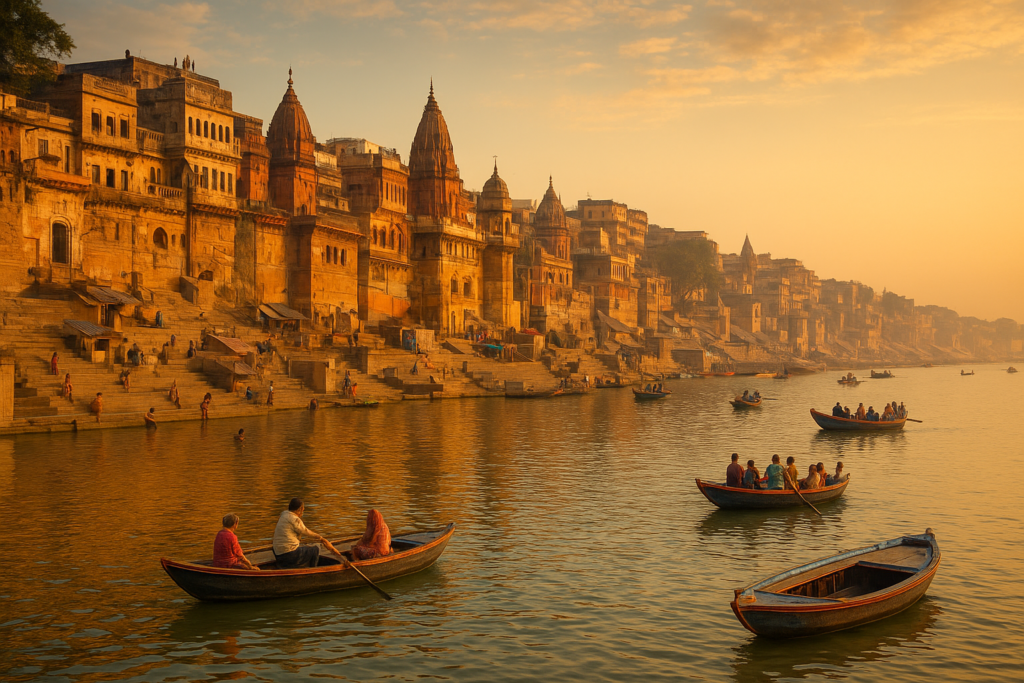
Varanasi is also an important center of Hindu pilgrimage. The Kashi Vishwanath Temple, dedicated to Lord Shiva, is one of the twelve Jyotirlingas and is considered extremely sacred. Millions of devotees visit this temple every year to seek blessings. The recently developed Kashi Vishwanath Corridor has made the temple more accessible and has enhanced the spiritual experience for pilgrims. Besides this, the city has numerous other temples, each telling its own story of faith and devotion.
Apart from Hinduism, Varanasi is closely linked with Buddhism. Nearby Sarnath is the place where Lord Buddha delivered his first sermon after attaining enlightenment. This makes the region very important for Buddhists across the world. Sarnath is home to the Dhamek Stupa, Ashoka Pillar, monasteries, and museums that reflect Buddhist teachings and art. Jainism also has a strong connection with Varanasi, as several Jain Tirthankaras were born in and around the city.
Varanasi has long been a center of education and learning. In ancient times, scholars from different parts of India came here to study philosophy, grammar, astronomy, and medicine. Today, Banaras Hindu University (BHU) stands as one of Asia’s largest and most prestigious universities. Founded by Pandit Madan Mohan Malaviya, BHU has played a major role in shaping modern education in India while preserving Indian cultural values.
The city is also renowned for its rich cultural heritage. Varanasi is famous for its classical music, especially Hindustani classical music. Legendary musicians like Pandit Ravi Shankar and Ustad Bismillah Khan were closely associated with the city. The Banarasi silk sarees, known for their intricate designs and fine craftsmanship, are admired across the world. These sarees represent the artistic skill passed down through generations of weavers.
Life in Varanasi is a unique blend of the ancient and the modern. Narrow lanes, bustling markets, old houses, and temples coexist with modern roads, institutions, and technology. The city is also known for its deep connection with life and death. Many Hindus believe that dying in Varanasi and being cremated at Manikarnika Ghat leads to liberation from the cycle of rebirth, known as moksha.
In conclusion, Varanasi is not just a city but a spiritual experience. It represents the soul of India, where faith, tradition, culture, and daily life are deeply intertwined. The chants of mantras, the sound of temple bells, the flowing Ganga, and the timeless rituals give Varanasi a divine charm that touches the heart of every visitor. As a city that has stood the test of time, Varanasi continues to inspire millions and remains a symbol of India’s eternal spiritual heritage.
Leave a Reply