Rameshwaram is one of the most revered pilgrimage destinations in India, located on Pamban Island in the Ramanathapuram district of Tamil Nadu. Surrounded by the vast expanse of the Bay of Bengal and the Indian Ocean, this holy town holds immense spiritual, historical, and cultural significance. Rameshwaram is counted among the Char Dham—the four most sacred Hindu pilgrimage sites—and is also one of the twelve Jyotirlingas dedicated to Lord Shiva. Its unique blend of mythology, architectural grandeur, and serene coastal beauty makes Rameshwaram a place of deep devotion and timeless charm.
Mythological and Religious Significance
The spiritual importance of Rameshwaram is deeply rooted in the Indian epic Ramayana. According to legend, Lord Rama worshipped Lord Shiva here to atone for the sin of killing Ravana, a Brahmin king. It is believed that Rama instructed Hanuman to bring a Shiva Lingam from Mount Kailash. However, as Hanuman was delayed, Goddess Sita created a Lingam from sand, which Rama worshipped. This Lingam, known as the Ramalingam, is enshrined in the Rameshwaram Temple.
Another Lingam brought by Hanuman later was also installed, called the Vishwalingam. Tradition holds that devotees must first worship the Vishwalingam before offering prayers to the Ramalingam. This story symbolizes humility, devotion, and the unity of different aspects of faith.
Rameshwaram is also closely associated with Shaivism and Vaishnavism, making it a rare pilgrimage site respected by followers of both traditions. For Hindus, a pilgrimage to Rameshwaram is believed to grant moksha (liberation from the cycle of birth and death).
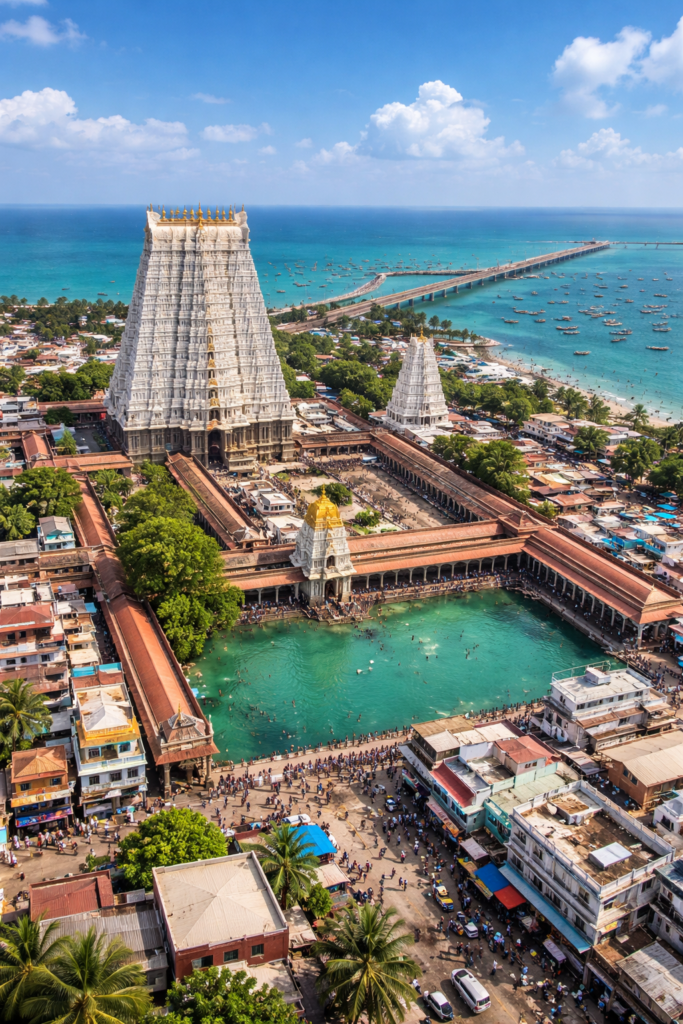
Rameshwaram Temple: An Architectural Marvel
The heart of the town is the Ramanathaswamy Temple, one of the finest examples of Dravidian architecture. The temple is renowned for having the longest corridor in any Hindu temple in the world, stretching over 1,200 meters with nearly 1,000 intricately carved granite pillars. These corridors reflect exceptional craftsmanship and artistic excellence.
The temple complex features towering gopurams (ornate entrance towers), majestic mandapas (pillared halls), and sacred shrines. The sanctum sanctorum houses the Ramalingam, where devotees offer prayers with deep reverence. The temple’s design, symmetry, and spiritual atmosphere leave a lasting impression on visitors.
Sacred Water Bodies and Ritual Baths
A unique feature of Rameshwaram is its sacred water bodies. The Ramanathaswamy Temple has 22 holy wells (theerthams) within its premises, each believed to possess medicinal and spiritual properties. Pilgrims traditionally take ritual baths in these wells before entering the sanctum, symbolizing purification of body and soul.
Apart from these, Rameshwaram is associated with 64 theerthams, including Agni Theertham, located on the seashore near the temple. A dip in Agni Theertham at sunrise is considered extremely auspicious and is believed to cleanse one of sins. These sacred rituals are an integral part of the pilgrimage experience.
Historical Importance
Rameshwaram has played a significant role in India’s historical and cultural evolution. The temple has received patronage from various South Indian dynasties, including the Pandyas, Cholas, and Sethupathi rulers, who contributed to its expansion and architectural refinement over centuries.
The town also holds importance in modern Indian history as it is closely associated with Dr. A.P.J. Abdul Kalam, the former President of India. Born in Rameshwaram, Kalam often spoke about how the town’s spiritual harmony and simplicity shaped his values and worldview.
Geography and Natural Beauty
Rameshwaram is situated on a beautiful island connected to mainland India by the iconic Pamban Bridge, India’s first sea bridge. The sight of the bridge stretching across turquoise waters is breathtaking and symbolizes the town’s connection to both tradition and progress.
The town’s proximity to the sea gives it pristine beaches, gentle waves, and a peaceful atmosphere. The coastline near Dhanushkodi, a ghost town at the southeastern tip of the island, offers a surreal experience where the Bay of Bengal meets the Indian Ocean. According to mythology, Dhanushkodi marks the point from where Lord Rama built the Ram Setu (Adam’s Bridge) to Lanka.
Cultural Traditions and Festivals
Rameshwaram is vibrant with religious festivals and rituals throughout the year. Maha Shivaratri is the most significant festival, attracting thousands of devotees who observe fasting and night-long prayers. Other festivals like Rama Navami, Navaratri, and Thai Amavasya are celebrated with great devotion.
The town’s culture reflects traditional Tamil customs, spiritual music, temple rituals, and simple coastal lifestyle. Pilgrims often experience a deep sense of peace and devotion while participating in temple ceremonies and chants.
Economy and Local Life
The local economy of Rameshwaram is primarily driven by pilgrimage tourism, fishing, and small-scale trade. Hotels, lodges, transport services, and shops selling religious items thrive due to the constant flow of devotees. The fishing community plays a vital role in sustaining the town, reflecting a harmonious relationship between faith and livelihood.
Spiritual Experience and Modern Relevance
In today’s fast-paced world, Rameshwaram offers a rare opportunity for introspection and spiritual renewal. The rhythmic sound of temple bells, the vast sea horizons, and the sacred rituals create an atmosphere that encourages meditation and inner peace.
Despite modern developments, Rameshwaram has preserved its spiritual essence and traditional values. Improved connectivity, infrastructure, and facilities have made the town more accessible while maintaining its sanctity.
Conclusion
Rameshwaram is not just a pilgrimage destination; it is a profound spiritual journey that connects mythology, history, architecture, and nature. Its sacred temples, holy waters, rich traditions, and serene coastal beauty make it one of the most important spiritual centers in India. For devotees, Rameshwaram is a path to salvation; for travelers, it is a place of cultural discovery and peace. Timeless in its appeal, Rameshwaram continues to inspire faith, devotion, and reverence across generations.