Introduction — What & Where Is Iran?
Iran — officially the Islamic Republic of Iran — is a country in Western Asia situated at a geographic crossroads between Central Asia, South Asia, and the Middle East. It occupies about 1,648,195 km², making it one of the larger countries in the region. The nation borders Armenia and Azerbaijan to the north, the Caspian Sea to the northwest, Turkmenistan to the northeast, Afghanistan and Pakistan to the east, and Iraq and Turkey to the west. The Persian Gulf and the Gulf of Oman lie to the south, giving Iran strategic access to the vital Strait of Hormuz — a chokepoint for global oil transport.
The official language is Persian (Farsi), and Islam, particularly Twelver Shi’a Islam, is the state religion. Iran’s capital and largest city is Tehran — a major political, cultural, and economic centre.
Physical Geography & Environment
Iran’s landscape is marked by mountain ranges, plateaus, deserts, and coastlines. The Zagros Mountains stretch from the northwest to the southeast, while the Alborz Mountains run along the northern edge near the Caspian Sea. These highlands enclose the vast central deserts, including the Dasht-e Kavir and Dasht-e Lut. The country’s highest peak is Mount Damavand (5,625 m), an iconic volcano in the Alborz range.
The climate varies widely — from arid and semi-arid in the inland plateaus and deserts to subtropical along the Caspian coast. Iran faces significant environmental challenges including desertification, water scarcity, and air pollution. Its water crisis has worsened in recent years due to climate change and unsustainable agricultural policies, threatening water security even in major cities like Tehran.
A Long and Influential History
Ancient and Imperial Eras
Iran’s history stretches back thousands of years. Ancient Persian civilizations, such as the Elamites and later the Medes, laid the foundations for powerful empires. The Achaemenid Empire (c. 550–330 BCE), founded by Cyrus the Great, was one of the largest empires in the ancient world, known for administrative sophistication and respect for local cultures. This was followed by other imperial dynasties — the Parthians and the Sassanids — that ruled until the Arab conquests in the 7th century.
Under the Sassanids, Persia rivalled the might of Rome and Byzantium, leaving a rich legacy in art, architecture, and religion, particularly the development of Zoroastrianism. With the arrival of Islam, Iran gradually became a centre of Islamic civilization, producing remarkable contributions in science, philosophy, literature, and the arts during the Islamic Golden Age.
Modern History & Revolution
In the early modern era, Iran was shaped by the Safavid dynasty, which in the 16th century made Shi’a Islam the state religion, deeply influencing Iranian identity. The 19th and early 20th centuries saw increasing foreign influence from Britain and Russia.
In the 20th century, political reforms, oil wealth, and tensions over modernity culminated in the 1979 Islamic Revolution, which overthrew the Pahlavi monarchy and established the Islamic Republic under Ayatollah Ruhollah Khomeini. This revolution profoundly altered Iran’s political trajectory and its relations with the West.
Political System & Governance
Iran’s political system is a unique theocratic republic blending religious authority with republican institutions.
Core Institutions
- Supreme Leader: The highest authority, currently Ayatollah Ali Khamenei, controls key levers like the military, judiciary, and media.
- President: Head of government responsible for executive administration, currently Masoud Pezeshkian.
- Parliament (Majles): Unicameral legislative body with limited powers within the framework defined by the religious establishment.
- Guardian Council: Unelected body that vets candidates for office and ensures conformity of laws with Islamic principles.
This fusion of clerical oversight and electoral politics gives the Supreme Leader and allied institutions outsized influence over national affairs.
Human Rights & Politics Today
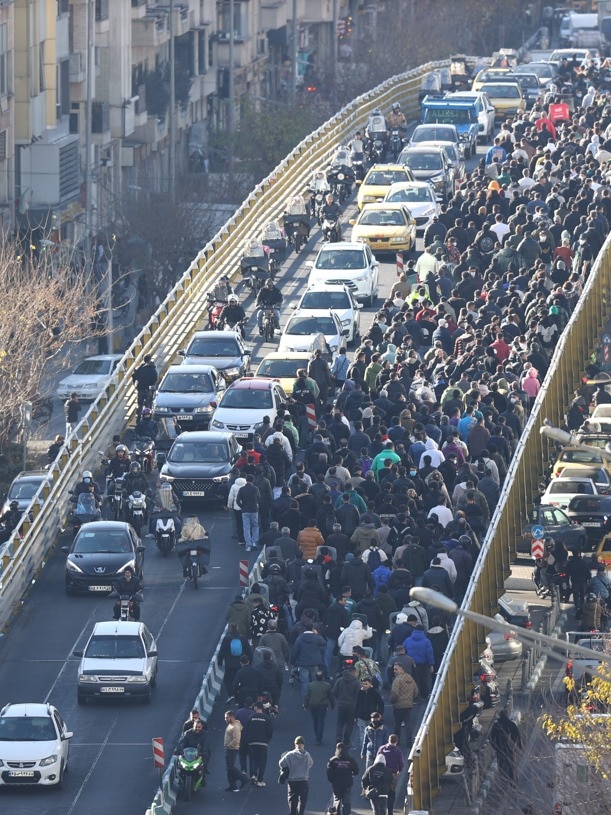
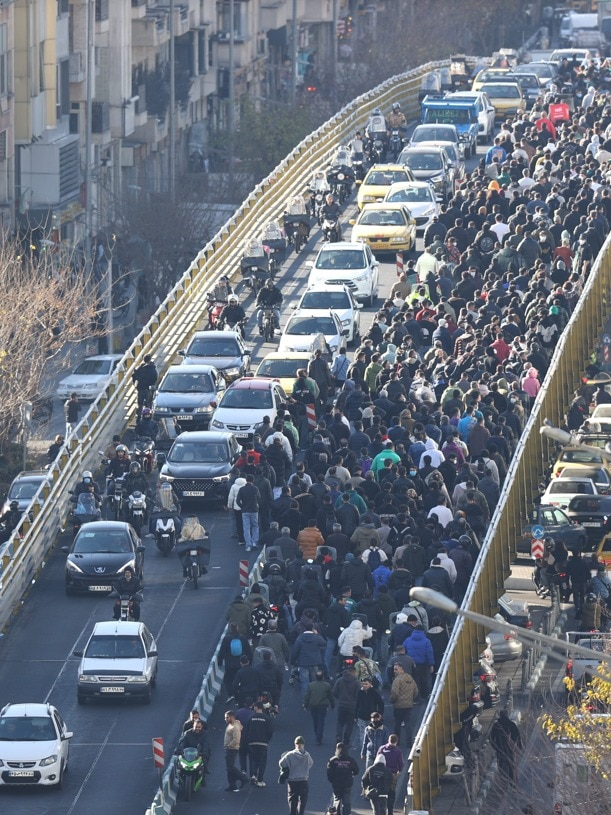
Iran regularly contends with political dissent and human rights criticisms. In recent years, widespread protests — including after the 2022 death of Mahsa Amini and more recent demonstrations over economic hardship — have shown deep social tensions. The government has often responded with force and internet blackouts to suppress dissent.
Demographics & Society
Iran’s population is ethnically diverse, with Persians as the majority, along with Azeris, Kurds, Lurs, Arabs, Baluchis, and others. The dominant religion is Shi’a Islam, though there are religious minorities, including Sunni Muslims, Christians, Jews, and Zoroastrians. Persian language and culture bind the nation’s many communities, though regional languages and identities also persist.
Youth constitute a large portion of the population. Demographic pressures intersect with economic stagnation and social aspirations, fueling change and generational tensions.
Economy & Natural Resources
Oil, Gas & Industry
Iran sits atop some of the world’s largest oil and natural gas reserves, forming the backbone of its economy. It is a member of OPEC and historically exported millions of barrels of oil per day, though production and export levels have fluctuated amid international sanctions.
Energy revenues have funded government budgets but also made the economy susceptible to global price swings and geopolitical pressures. Iran also has significant mineral resources, including copper, iron ore, and coal.
Sanctions & Economic Challenges
Decades of sanctions — especially from the United States and European Union over Iran’s nuclear program — have restricted trade and investment. These pressures have led to currency devaluation, inflation, and reduced foreign exchange revenues. In late 2025 and early 2026, economic crises sparked nationwide protests as living costs soared and the rial collapsed.
Iran’s economy also grapples with state dominance of key sectors, corruption, and an expanding role for military-linked entities like the Revolutionary Guards, which control large parts of the economy and hinder private sector growth.
Culture, Identity & Contribution
Iran’s culture is one of the world’s oldest and richest, deeply influencing literature, poetry, philosophy, architecture, and art. Persian poets like Hafez, Rumi, and Ferdowsi are celebrated globally; Iranian cinema has won international acclaim. Iran’s architectural heritage — from Persepolis to Isfahan’s Naqsh-e Jahan Square — reflects centuries of artistic achievement.
Contemporary Iran balances its Islamic identity with a deep pride in its pre-Islamic heritage, seen in renewed cultural events and celebrations of historical sites. This cultural soft-power move is sometimes used to foster national unity amid political and economic strain.
Iranian society also navigates evolving social norms, particularly around gender, expression, and media. While the state enforces certain restrictions, many Iranians push for broader freedoms, especially in urban centers.
Foreign Relations & Geopolitics
Iran exerts influence across the Middle East through political alliances and support for proxy groups. Its relations with Western powers — particularly the U.S. — have been tense since 1979. Nuclear negotiations, regional conflicts, and strategic competition with Saudi Arabia and Israel shape Tehran’s foreign policy.
The 2025 conflict with Israel, ongoing tensions in Iraq and Syria, and Iran’s role in regional security underscore its significance on the global stage. International reactions to Iran’s internal unrest and foreign policy illustrate the country’s complex interplay between domestic pressures and external engagement.
Contemporary Challenges & Future Outlook
Iran faces a crossroads of economic, environmental, social, and political challenges. Long-term water scarcity threatens agricultural and urban livelihoods. Economic stagnation and sanctions continue to squeeze living standards. Meanwhile, popular discontent and generational shifts strain the state’s legitimacy.
How Iran navigates these internal pressures — along with its regional ambitions and global relationships — will shape its development in the coming decades.