Dhanbad: The Coal Capital of India
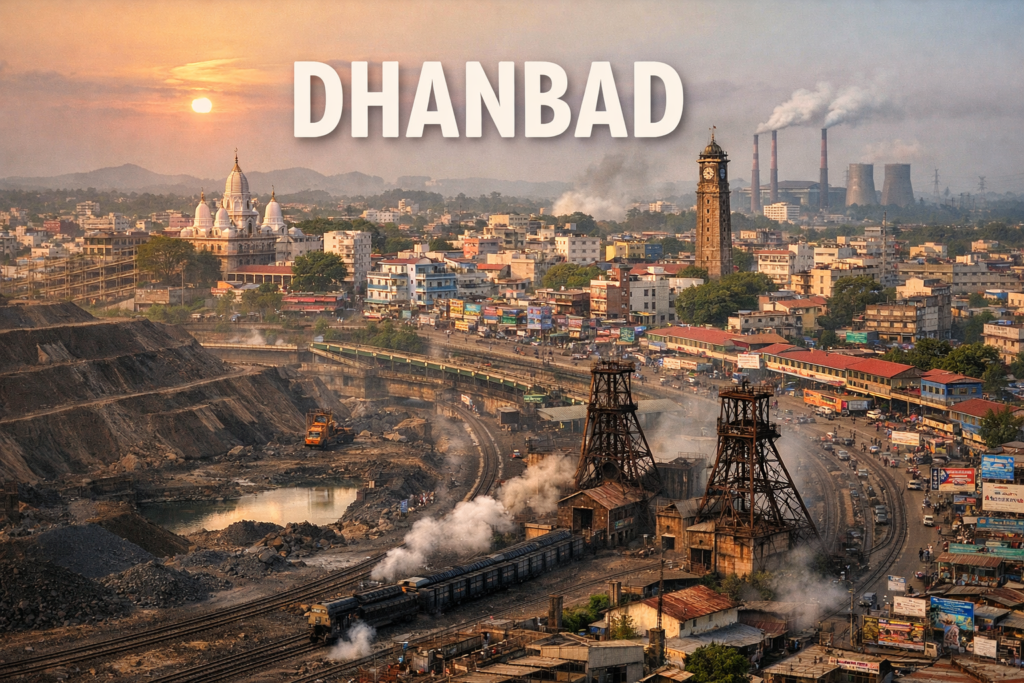
Dhanbad, a prominent city in the state of Jharkhand, holds a unique place in India’s industrial and economic landscape. Popularly known as the “Coal Capital of India,” Dhanbad is renowned for its vast coal reserves, mining heritage, and contribution to the nation’s energy needs. Beyond coal, the city is also an important center for education, culture, and trade in eastern India. With a rich historical background and a strong industrial base, Dhanbad continues to play a vital role in India’s development.
Geographical Location and Climate
Dhanbad is located in the eastern part of India, in the Chotanagpur Plateau region of Jharkhand. It lies close to the border of West Bengal, which has influenced its language, culture, and trade practices. The city is surrounded by hills, forests, and mining areas, giving it a distinctive landscape shaped by both nature and industry.
The climate of Dhanbad is tropical, with hot summers, moderate monsoons, and cool winters. Summers can be quite hot, with temperatures often rising above 40°C, while winters are pleasant and cool. The monsoon season brings rainfall that supports agriculture and replenishes water resources, although mining activities have affected natural drainage in some areas.
Historical Background
The history of Dhanbad is closely linked to the discovery and exploitation of coal in the Jharia Coalfield, one of the richest coalfields in India. During the British colonial period, coal mining expanded rapidly to meet the growing demand of railways and industries. As a result, Dhanbad developed from a small settlement into a major industrial town.
After India’s independence, the coal industry was nationalized, leading to the formation of Bharat Coking Coal Limited (BCCL), a subsidiary of Coal India Limited. This further strengthened Dhanbad’s position as a major coal-producing region. Over time, the city attracted workers, engineers, and professionals from different parts of the country, shaping its diverse social fabric.
Economic Importance
Dhanbad’s economy is primarily driven by coal mining and related industries. The Jharia Coalfield produces high-quality coking coal, which is essential for steel production. Major steel plants across India depend on coal supplied from this region. In addition to coal, Dhanbad supports industries related to power generation, engineering, transportation, and equipment manufacturing.
Trade and commerce also contribute to the city’s economy. Dhanbad serves as a commercial hub for nearby towns and rural areas, with markets dealing in coal, machinery, agricultural products, and consumer goods. The presence of banks, warehouses, and transport facilities further supports economic activity.
Education and Research
Apart from coal, Dhanbad is widely recognized for its contribution to technical education and research. The city is home to the Indian Institute of Technology (Indian School of Mines), Dhanbad, one of India’s most prestigious institutions. Established in 1926, IIT (ISM) Dhanbad has played a significant role in training skilled engineers, geologists, and mining experts who have contributed to India’s industrial growth.
The city also has several colleges, schools, and training institutes offering education in science, commerce, arts, and vocational skills. This educational infrastructure has helped Dhanbad evolve from a purely industrial town into an academic center of national importance.
Culture and Society
Dhanbad has a diverse and multicultural society due to the influx of people from different regions for mining and industrial work. Communities from Jharkhand, Bihar, West Bengal, Uttar Pradesh, and other states coexist, creating a blend of languages, traditions, and cuisines. Hindi is widely spoken, along with Bengali, Bhojpuri, Maithili, and local tribal languages.
Festivals such as Diwali, Holi, Durga Puja, Chhath Puja, Eid, and Christmas are celebrated with great enthusiasm, reflecting communal harmony. Durga Puja, in particular, is celebrated on a grand scale due to the influence of Bengali culture.
Transportation and Connectivity
Dhanbad is well connected by rail, road, and nearby air routes. The Dhanbad Junction railway station is one of the busiest and most important stations in eastern India, connecting the city to major metropolitan centers like Delhi, Kolkata, Mumbai, Chennai, and Patna. The Grand Chord railway line passes through Dhanbad, making it a vital rail hub.
Road connectivity is provided by national and state highways linking Dhanbad to Ranchi, Bokaro, Asansol, and other cities. Although Dhanbad does not have its own airport, nearby airports such as Ranchi and Kolkata provide air connectivity.
Environmental Challenges
While coal mining has brought economic prosperity, it has also caused serious environmental challenges. Issues such as land degradation, air pollution, water contamination, and underground coal fires in the Jharia region have raised concerns about sustainability and public health. The Jharia coal fires, which have been burning for decades, pose risks to both residents and infrastructure.
Efforts are being made by the government and mining authorities to rehabilitate affected areas, relocate populations, and adopt cleaner mining practices. Environmental awareness and sustainable development are becoming increasingly important for the future of Dhanbad.
Tourism and Places of Interest
Although primarily an industrial city, Dhanbad has several places of interest. Maithon Dam and Panchet Dam, located nearby, are popular tourist attractions offering scenic views and recreational opportunities. Temples, parks, and cultural centers within the city also attract visitors.
The surrounding forests and hills provide opportunities for nature exploration, making Dhanbad an emerging destination for eco-tourism alongside its industrial identity.
Conclusion
Dhanbad is a city of contrasts—where industry meets education, and tradition blends with modernity. As the Coal Capital of India, it has played a crucial role in powering the nation’s growth and industrialization. At the same time, institutions like IIT (ISM) Dhanbad have elevated the city’s academic reputation on a global level.
Despite facing environmental and infrastructural challenges, Dhanbad continues to evolve with efforts toward sustainable development, modernization, and social progress. Its rich history, economic significance, cultural diversity, and educational excellence make Dhanbad an important and dynamic city in India’s journey toward development.
For more information please visit www.Babushivamraj.com