Haridwar is one of the most ancient and sacred cities of India. Located in the state of Uttarakhand, it lies at the foothills of the Himalayas where the holy River Ganga emerges from the mountains and enters the plains. The name Haridwar is derived from two words: Hari (Lord Vishnu) and Dwar (gateway), meaning “Gateway to Lord Vishnu.” It is also known as Gangadwar, the place where the Ganga descends to the earth. For centuries, Haridwar has been a major center of spirituality, pilgrimage, and Indian culture.
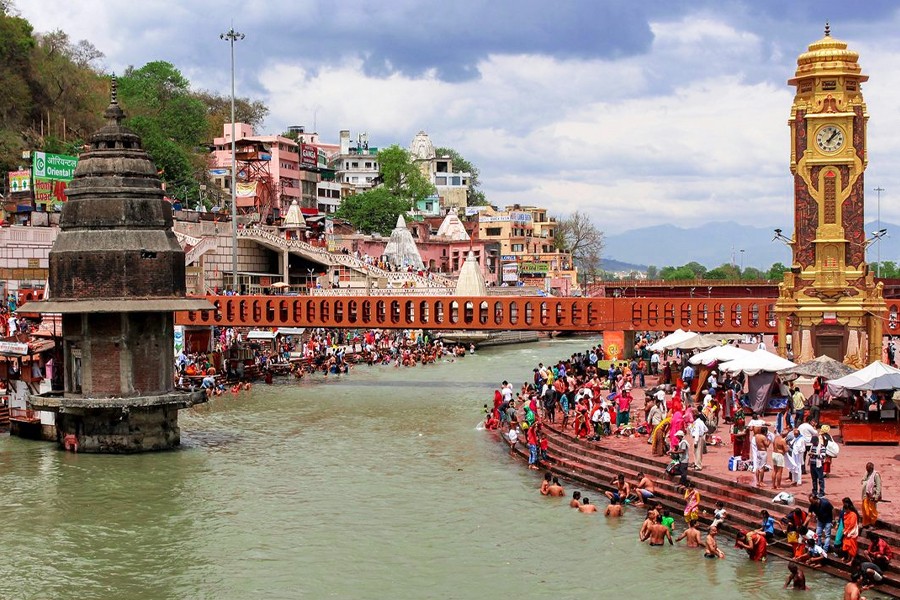
Haridwar holds immense religious importance in Hinduism. It is one of the seven holiest cities (Sapta Puri) of India, along with Ayodhya, Mathura, Kashi, Kanchipuram, Ujjain, and Dwarka. According to Hindu belief, taking a dip in the sacred waters of the Ganga at Haridwar washes away sins and helps attain salvation (moksha). This belief attracts millions of pilgrims every year from different parts of India and the world. The city is especially crowded during auspicious occasions such as Ganga Dussehra, Kartik Purnima, and the famous Kumbh Mela.
The Kumbh Mela is the most significant event associated with Haridwar. It is the largest religious gathering in the world, held once every twelve years on the banks of the Ganga. Millions of saints, sages, and devotees gather to take the holy bath during this festival. According to mythology, drops of amrit (nectar of immortality) fell at Haridwar during the churning of the ocean (Samudra Manthan), making it one of the four Kumbh Mela sites. The sight of Naga sadhus, colorful processions, and spiritual discourses during the Kumbh Mela is truly mesmerizing.
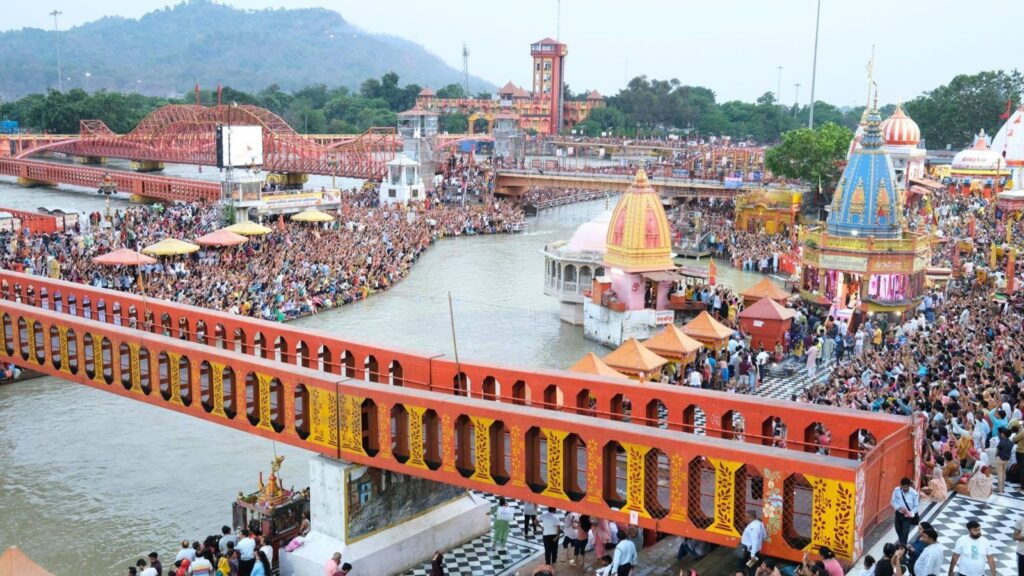
One of the most famous landmarks of Haridwar is Har Ki Pauri. It is a revered ghat on the banks of the Ganga and is believed to be the spot where Lord Vishnu left his footprint. Every evening, the Ganga Aarti performed at Har Ki Pauri creates a divine atmosphere. Priests offer lamps, flowers, and prayers to the river while devotional chants fill the air. Thousands of devotees gather to witness this spiritual ritual, making it one of the most peaceful and enchanting experiences in India.
Haridwar is also home to many ancient temples and ashrams. The Mansa Devi Temple, situated on the Bilwa Parvat, is dedicated to Goddess Mansa Devi and is visited by devotees seeking fulfillment of wishes. The Chandi Devi Temple, located atop the Neel Parvat, is another important shrine. Both temples can be reached by trekking or ropeway, offering scenic views of the surrounding hills and the city. Other notable places include Maya Devi Temple, Bharat Mata Mandir, and Daksha Mahadev Temple.
Apart from its religious significance, Haridwar is an important center for yoga, meditation, and Ayurveda. Many ashrams and institutions provide spiritual education and training in yogic practices. The peaceful environment, combined with the presence of the sacred river and the Himalayas, makes Haridwar an ideal place for spiritual learning and self-reflection. People from different countries visit the city to study yoga and experience the Indian way of life.
Haridwar also plays a vital role in preserving Indian traditions and culture. The city reflects a unique blend of spirituality and simplicity. Vegetarian food, traditional attire, and a disciplined lifestyle are common here. Alcohol and non-vegetarian food are prohibited in many parts of the city, maintaining its sacred character. Local markets offer religious items, Ayurvedic products, handicrafts, and souvenirs, adding to the charm of the place.
In conclusion, Haridwar is not just a city but a spiritual experience. It represents the deep-rooted faith, culture, and traditions of India. With its holy river, ancient temples, grand festivals, and serene atmosphere, Haridwar continues to inspire devotion and inner peace. It stands as a symbol of India’s spiritual heritage and remains a timeless destination for pilgrims and travelers alike.
Leave a Reply