Badrinath Dham is one of the most sacred Hindu pilgrimage sites in India and holds immense religious, cultural, and spiritual significance. Located in the Chamoli district of Uttarakhand, Badrinath lies in the Garhwal Himalayas at an elevation of about 3,300 meters above sea level, on the banks of the holy Alaknanda River. It is one of the four sacred pilgrimage centers of the Char Dham Yatra—Badrinath, Kedarnath, Gangotri, and Yamunotri—and is also a key shrine among the 108 Divya Desams dedicated to Lord Vishnu.
Religious Significance
Badrinath Dham is dedicated to Lord Vishnu, who is worshipped here in the form of Badri Narayan. According to Hindu beliefs, Lord Vishnu meditated at this place for the welfare of humanity. It is said that Goddess Lakshmi took the form of a berry tree (Badri) to protect him from harsh weather, which is why the place came to be known as Badrinath. The temple holds special importance for Vaishnavites, and a visit here is believed to wash away sins and help attain salvation (moksha).
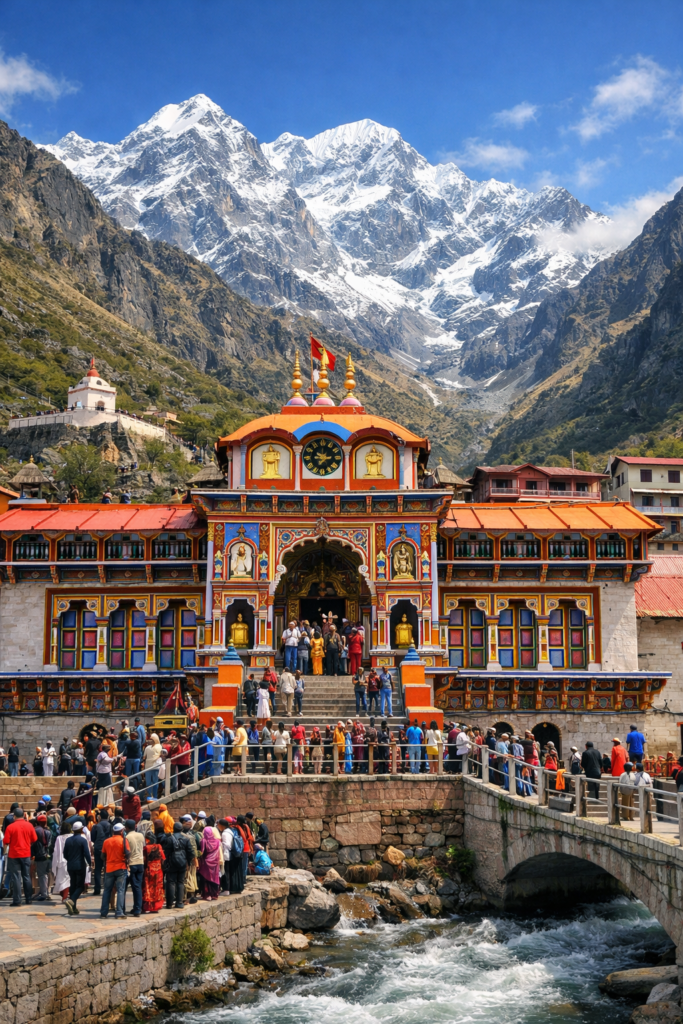
The shrine was re-established in the 8th century by Adi Shankaracharya, the great Hindu philosopher and reformer. He discovered the idol of Lord Vishnu in the Alaknanda River and installed it in the temple. Since then, Badrinath has remained a central symbol of devotion and spiritual unity.
The Badrinath Temple
The Badrinath Temple has a striking architecture with a colorful façade and a gold-gilded roof. Built in the traditional Garhwali style, the temple stands against the majestic backdrop of the Neelkanth Peak, often called the “Queen of Garhwal.” Inside the sanctum, the black stone idol of Badri Narayan is seated in a meditative posture, flanked by idols of Nar and Narayan.
The temple remains open only for about six months each year, usually from April or May to November, due to heavy snowfall during winter. During the winter months, the idol is ceremoniously shifted to Joshimath, where worship continues.
Mythological Importance
Badrinath finds frequent mention in Hindu scriptures such as the Puranas, Mahabharata, and Vedas. It is believed that the Pandavas visited this region during their journey to heaven. Nearby sites like Mana Village, the last Indian village near the Tibet border, are associated with legendary tales such as the writing of the Mahabharata by Sage Ved Vyasa at Vyas Gufa.
Another important spot is Tapt Kund, a natural hot water spring near the temple. Pilgrims take a holy dip here before entering the shrine, as the water is believed to have healing properties.
Natural Beauty and Surroundings
Apart from its religious importance, Badrinath Dham is renowned for its breathtaking natural beauty. Snow-covered peaks, alpine forests, flowing rivers, and serene valleys create a spiritually uplifting atmosphere. The region is part of the Nanda Devi Biosphere Reserve, which is rich in biodiversity.
Nearby attractions include Mata Murti Temple, Charan Paduka, and Vasudhara Falls, each adding to the spiritual and scenic appeal of the region.
Cultural and Spiritual Experience
A pilgrimage to Badrinath is not just a religious journey but also a deeply personal and transformative experience. The chanting of Vedic hymns, temple rituals, and the peaceful Himalayan environment provide mental calm and spiritual strength. Festivals like Mata Murti Ka Mela and special aartis attract thousands of devotees from across India and abroad.
Conclusion
Badrinath Dham stands as a timeless symbol of faith, devotion, and divine presence. Its blend of mythology, spirituality, and natural grandeur makes it one of the most revered pilgrimage destinations in India. Visiting Badrinath is believed to purify the soul and bring one closer to the divine, making it a cherished goal for millions of devotees. Whether viewed as a sacred shrine or a place of profound peace, Badrinath Dham continues to inspire awe, reverence, and spiritual fulfillment.
Leave a Reply