Bade Hanuman Ji, Prayagraj—also known as Lete Hanuman Ji (Reclining Hanuman)—is one of the most revered and unique Hanuman temples in India. Located in Prayagraj (Allahabad), Uttar Pradesh, near the sacred Sangam of the rivers Ganga, Yamuna, and the invisible Saraswati, this temple holds immense religious, historical, and cultural significance.
Location and Importance
The Bade Hanuman Ji Temple is situated inside the Prayagraj Fort area, close to the Sangam. Prayagraj itself is among the holiest cities of Hinduism and is famous for hosting the Kumbh Mela, the world’s largest religious gathering. The presence of Bade Hanuman Ji adds to the city’s spiritual aura, attracting devotees from across India throughout the year
.
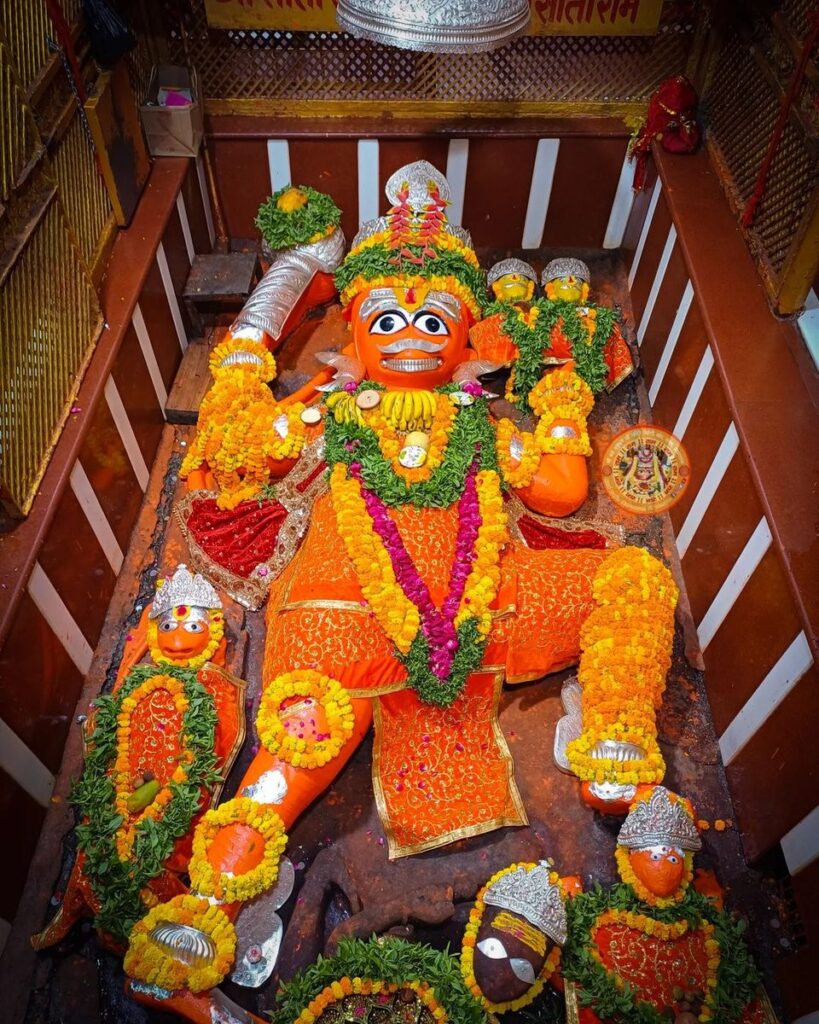
Unique Idol of Hanuman
What makes Bade Hanuman Ji truly special is the reclining posture of Lord Hanuman. Unlike most Hanuman temples where the deity is shown standing or flying, here Hanuman Ji is depicted lying down (lete hue) with his face turned slightly to the side. The idol is believed to be self-manifested (Swayambhu) and is partially submerged, especially during the monsoon season.
The idol is said to be about 20 feet long, and during the rainy season when the Ganga rises, the water gradually reaches the idol’s chest. Devotees believe that the level of water around the idol is an indicator of the year’s prosperity—if the water rises high, it is considered a sign of abundance and good fortune.
Mythological Beliefs
According to popular belief, Lord Hanuman rests here in a calm and peaceful state after completing his divine duties mentioned in the Ramayana. It is believed that Lord Rama granted Hanuman Ji the boon of eternal presence on earth, and Bade Hanuman Ji of Prayagraj is considered one of the living forms of this blessing.
Another belief suggests that when Mother Ganga descends to earth, she first pays respect to Bade Hanuman Ji, washing his feet before moving ahead. This belief further elevates the temple’s spiritual importance.
Connection with Akshayavat
Near the Bade Hanuman Ji Temple lies the ancient Akshayavat (Immortal Banyan Tree), which is also highly sacred. Scriptures mention that during cosmic dissolution (pralaya), Akshayavat remained standing. The close proximity of Akshayavat and Bade Hanuman Ji makes the area extremely significant for pilgrims.
Religious Practices and Festivals
Devotees visit Bade Hanuman Ji to seek strength, courage, protection from evil, and relief from troubles. Tuesdays and Saturdays are considered especially auspicious for Hanuman worship, and on these days the temple sees a large crowd.
Major festivals celebrated here include:
- Hanuman Jayanti
- Ram Navami
- Magh Mela
- Kumbh and Ardh Kumbh Mela
During Kumbh Mela, millions of pilgrims visit the temple after taking a holy dip at the Sangam.
Cultural and Historical Significance
Historically, the temple has been mentioned in various travel accounts and local traditions. Even during Mughal times, the idol of Bade Hanuman Ji remained unharmed, and rulers reportedly showed respect to the deity. This reflects the deep-rooted faith and reverence associated with the temple.
Spiritual Symbolism
Bade Hanuman Ji symbolizes humility, devotion, and inner peace. His reclining posture teaches devotees that true strength comes not only from action but also from surrender and rest in devotion to God. The temple serves as a reminder of unwavering faith and selfless service.
Conclusion
Bade Hanuman Ji of Prayagraj is not just a temple but a living center of faith, where mythology, nature, and devotion merge beautifully. Its unique idol, sacred location near the Sangam, and centuries-old beliefs make it one of the most important Hanuman temples in India. A visit to Prayagraj is considered incomplete without seeking the blessings of Bade Hanuman Ji, who continues to protect and guide devotees with his divine presence.
Leave a Reply